First steps in R does not pretend to be a comprehensive guide to R package (there are many excellent books and web tutorials) but it aims at providing an introduction to the R statistical package for the (under)graduate students following an introductory Statistics Course.
Introduction
Why R?
Although many tools are available for statistical analysis (including SAS, SPSS, Stata, Minitab, MATLAB, Wolfram Mathematica, among others), as well as dedicated statistical packages for programming languages such as Python (see, for example, statsmodels), we have chosen R because:
It is an integrated environment: it has been developed as a whole entity and not as a collection of tools. It includes:
An efficient system for data storage and manipulation
A collection of tools to manage arrays
Integrated tools for data analysis
Screen graphs and portable format graphs generation
A simple and effective programming language (with scripting capabilities): it incorporates features found in object-oriented and functional programming languages
It is free software! Available through the project WEB or through CRAN (Comprehensive R Archive Network)
Available for different platforms (source code and pre-compiled binaries): UNIX, MacOS, Windows
…
Many scientists are using it!
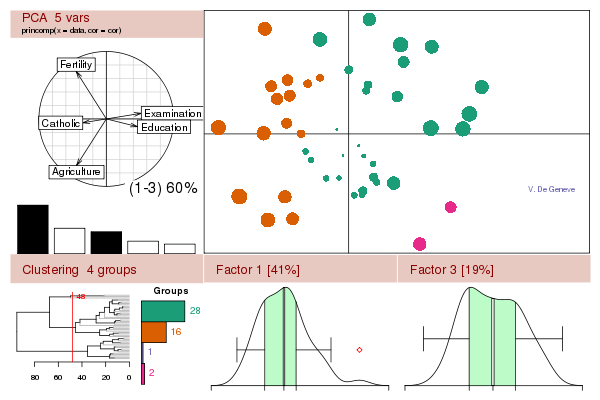
(image from R project web page)
Although… No statistical package can work miracles!
(GIGO: Garbage In, Garbage Out)
(image from http://www.lovemytool.com)
Warning
Regular Python users may be interested in taking a look at this link to see a summary of the most important differences between R and Python programming syntax.
Why is it called R?
R originated from the statistical programming language S, created at AT&T, and remains largely compatible with it. The name “S,” short for statistics, followed a naming convention similar to another well-known one-letter programming language developed at AT&T: C. Over time, S was acquired by a smaller company, which enhanced it by adding a graphical user interface and released it under the name S-Plus.
R has since surpassed S and S-Plus in popularity, largely because it is freely available and supported by a broad community of contributors. Due to its open-source foundation, R is sometimes referred to as GNU S, reflecting its association with the GNU Project, a prominent initiative dedicated to open-source software.